

 English

In today’s competitive packaging and product branding market,Booklet Labels have become an essential solution for brands that need to communicate large amounts of information in a limited label space.From pharmaceutical instructions to cosmetic usage guides and chemical safety details,booklet-style labeling allows companies to combine compliance,branding,and marketing in one compact format.
To design effective booklet labels,the first step is to clearly define the purpose of the content.Are you providing regulatory instructions,multilingual information,or promotional messaging?Once the content scope is clear,designers can decide the structure and folding style that best fits the product packaging.
One of the most popular formats is multi-layer Booklet Labels,which allow multiple pages of printed information to be stacked within a single adhesive label.This structure is ideal for products that require detailed instructions or translations without increasing packaging size.It also ensures durability during transportation and daily use.
Another widely used format is peel and reveal labels,designed for user interaction.These labels allow consumers to peel back layers to discover hidden information underneath.This not only increases engagement but also provides a practical way to present step-by-step instructions or promotional content.
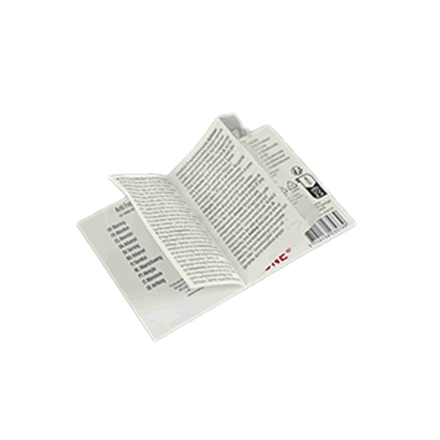
For brands requiring extended information capacity,extended content labels are the perfect solution.They maximize available space by integrating multiple folds and panels,making them suitable for industries such as healthcare,agriculture,and specialty chemicals where compliance information is critical.
Meanwhile,folded Booklet Labels offer a cost-effective and flexible option.They are typically designed with accordion or booklet-style folding,making them easy to open and reclose.This type of label is especially useful for compact packaging where readability and space optimization are equally important.
When designing any type of booklet label,readability should always be a priority.Use clear typography,structured layout hierarchy,and logical content flow.It is also important to consider material selection—durable adhesives and high-quality paper or synthetic substrates ensure the label withstands moisture,friction,and handling.
From a production perspective,digital printing and flexographic printing are commonly used to achieve high precision and color consistency.Modern die-cutting techniques also help create accurate folding structures for complex booklet designs.
In conclusion,whether you choose booklet labels,multi-layer booklet labels,peel and reveal labels,extended content labels,or folded booklet labels,the key to efficiency lies in balancing design clarity,user experience,and manufacturing feasibility.A well-designed booklet label not only improves compliance but also enhances brand perception and customer engagement.
As product packaging continues to evolve,booklet labels will remain a powerful tool for delivering rich content in a compact and user-friendly format.
