

 English

When a product's artwork, ingredient list, or multilingual instructions will not fit on a single label panel, the answer is almost always a multi-layer label. The harder question comes next: Double Layer Labels or three layer labels? Both add printable surface without making the container bigger, and both keep the front panel clean — but they solve different problems, and the difference shows up in cost, assembly, and how the consumer actually uses the label.
This guide explains how each structure works, compares them side by side, and gives a practical way to decide how many layers your product actually needs before you commit to print.
What Is a Double Layer Label?
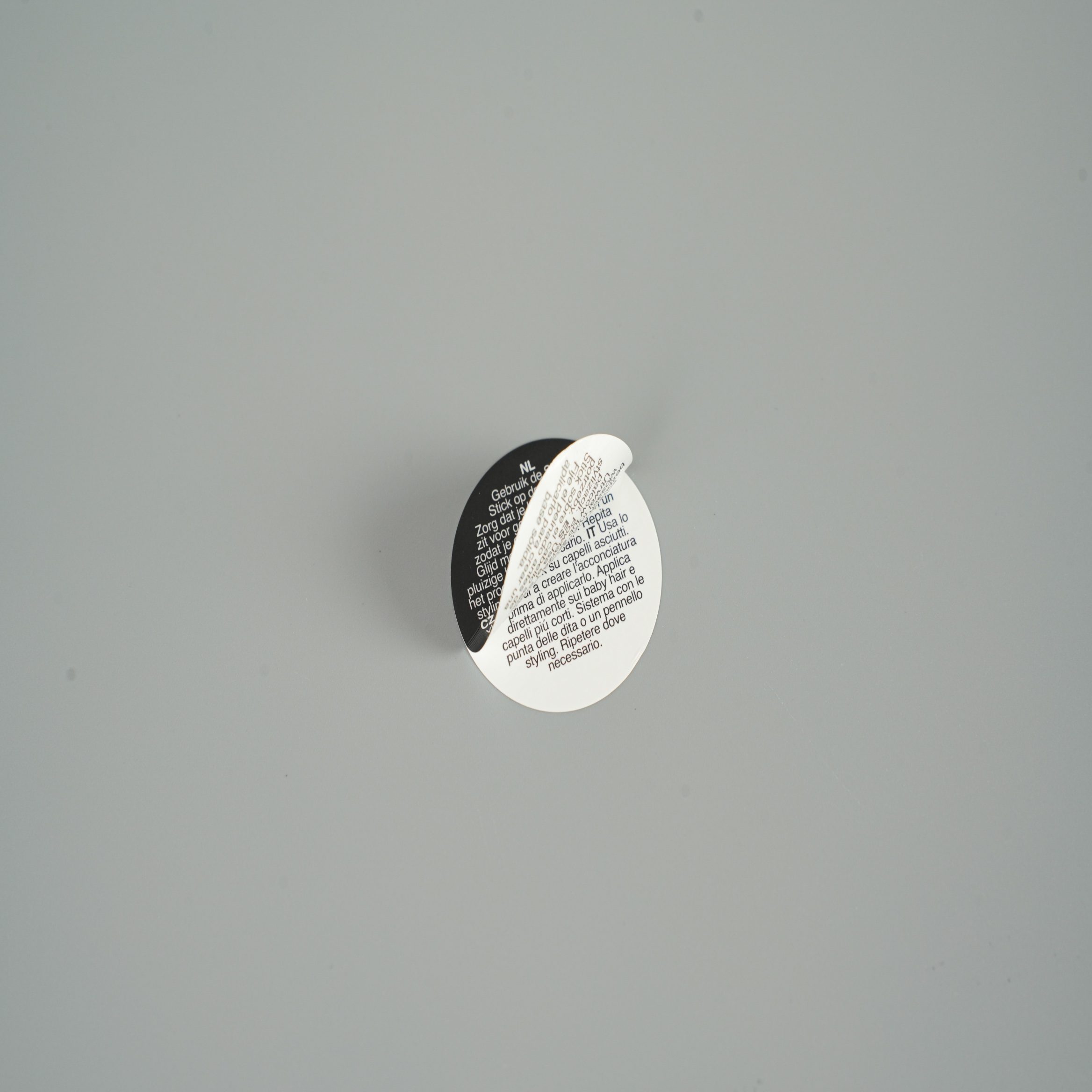
A double layer label — also called a two-ply or peel and reveal label — is built from two label layers stacked on a single release liner. The top layer carries the primary branding and the front-of-pack information, and it is designed to be peeled back by the consumer to reveal a second, hidden panel underneath.
That hidden panel is the reason most brands choose this structure. It gives you a second full panel of printable area in exactly the same footprint, which is enough for a short ingredient list, usage instructions, a legal notice, or a second language. Because the top layer can be re-applied, the label stays functional after opening rather than becoming a loose leaflet.
The mechanical structure is simple: two layers, one peel action, one reveal. That simplicity is also what makes a double layer label the most cost-effective way to add a second panel of information.
What Is a Three Layer Label?
A three layer label — sometimes specified as three ply labels — adds a third layer, so the consumer can peel twice. The first peel reveals a second panel, and the second peel reveals a third. In practice this means a three layer label can carry roughly three times the printable area of a single-panel label in the same footprint.
That extra panel changes what is possible. A three layer structure is normally chosen when the content set is genuinely long — a full ingredient list plus hazard statements plus directions in several languages, for example — or when the label also has to function as a mini booklet. Our custom three-ply self-adhesive labels and three-layer self-adhesive labels are both built on this principle.
The trade-off is mechanical complexity. Each additional layer means another adhesive interface, another alignment tolerance in converting, and another surface that has to stay flat on a curved container. Three layer labels cost more per unit than double layer labels, and they need a slightly larger minimum order to be economical.
Double Layer vs Three Layer Labels: Side-by-Side Comparison
The table below summarises the practical differences buyers ask about most often.
| Factor | Double layer label | Three layer label |
| Printable panels | Two — top layer plus one hidden panel | Three — top layer plus two hidden panels |
| Consumer action | One peel | Two peels |
| Typical content load | Short ingredient list, brief instructions, one extra language, a promotion or legal note | Full ingredient disclosure, hazard statements, multi-language instructions, warranty or registration text |
| Unit cost | Lower — fewer layers and fewer converting steps | Higher — extra layer, extra adhesive, tighter registration |
| Best container fit | Small to medium curved surfaces such as bottles and jars | Larger panels or flatter surfaces where a thicker construction stays stable |
| Main risk | Running out of panel space if the content grows later | Over-specifying and paying for a panel you never fill |
How Many Layers Does Your Product Actually Need?
Work backwards from the content, not from the label. Count the panels you genuinely need to print, then match that count to a structure.
Step 1: Count the mandatory panels
List every block of text that must appear somewhere on the pack: brand and product name, net quantity, manufacturer details, ingredient list, allergen or hazard declarations, directions for use, storage advice, and any market-specific regulatory text. Treat each language as a separate block, because multilingual markets multiply the requirement quickly.
Step 2: Decide what belongs on the front panel
The front panel is a marketing surface. Anything that is not a legal requirement and not needed at the moment of purchase should move to a hidden layer. This is where most projects find their answer: if the remaining blocks fit on one extra panel, a double layer label is sufficient. If they spill onto a second extra panel, you need three layers.
Step 3: Check the physical constraint
A three layer construction is thicker and stiffer. On a tight-radius container, that extra stiffness can cause lifting at the edges. If the container is small and strongly curved, and a double layer label can carry the content, the two-layer option is usually the more reliable choice.
Step 4: Allow room for growth
Ingredient lists and disclosure rules tend to get longer, not shorter. If your double layer label is already full at launch, moving to a three layer structure later means new tooling, new artwork, and a reprint. Where the content is close to the limit, three layers is often the cheaper decision over the product's life.
When a Double Layer Label Is the Better Choice
The hidden panel only needs one language or one short block of text.
You want a peel and reveal effect for a promotion, coupon, or scratch-style reveal.
The container is small or strongly curved and you want the flattest possible construction.
You are testing a new product and want to keep tooling and unit cost low.
The content is stable and unlikely to grow with regulatory changes.
Most cosmetic and personal care projects land here. Our double layer label and double-layer self-adhesive label are both built for this use case.
When a Three Layer Label Is the Better Choice
The product is sold in several countries and the label must carry multiple languages.
Full ingredient disclosure is required on-pack rather than by website reference.
The label doubles as an instruction sheet, warranty card, or registration panel.
Hazard and precautionary statements have to sit alongside directions for use.
You expect the required content to expand and do not want to reprint.
Cleaning products and detergents are the clearest example — the disclosure load in those markets is heavy enough that a two-panel structure often runs out of room, as we covered in our guide to detergent labeling requirements. Where the content is even longer, a multi-layer composite instruction label or a booklet structure may be the better fit again.
Common Mistakes When Specifying Multi-layer Labels
Specifying layers before counting content. Choose the structure after you know how many panels you need, not before.
Forgetting the peel direction. The reveal has to work in the consumer's hand, not just on a flat proof.
Ignoring the container material. HDPE, PET, glass, and aluminium each need a different adhesive, and the wrong match causes lifting or curling.
Designing the top layer as if it were permanent. Once peeled, the top layer becomes part of the reading experience — it needs a clean reverse side.
Leaving the print unprotected. A film laminate keeps the hidden panels legible through water, oils, and repeated handling.
Not checking type size at final scale. A panel that is legible on screen can become unreadable once the label is reduced to fit the bottle.
If you are still deciding between the two structures, the fastest route is to send us the container dimensions, the market, and the full text that has to appear on the pack. We can confirm which multi-layer label structure carries it — send your requirement here and we will come back with a recommendation and a quotation.
Conclusion
The choice between double layer labels and three layer labels is not about which is better — it is about how much hidden content your product genuinely has to carry. A double layer label gives you one extra panel at the lowest unit cost and the flattest construction, which suits most small and mid-size containers. A three layer label gives you two extra panels and absorbs the heavy, multilingual disclosure loads that regulation keeps adding.
The practical rule is simple: count the panels first, then pick the structure. If the content fits on one extra panel, two layers is enough. If it needs two, three layers will save you a reprint later. And if the content needs more than three panels, a booklet or composite structure is the right conversation to have.
