

 English

Almost every labeling project starts with a design question and then hits a supply question that nobody planned for: should these roll labels or sheet labels? The answer is rarely a matter of preference. It is decided by how the label will be applied, how many you need, and what your production line can physically accept.
This guide explains how each format is supplied, how the application method drives the choice, what you need to specify on a roll order, and where the cost actually changes.
What Are Roll Labels?
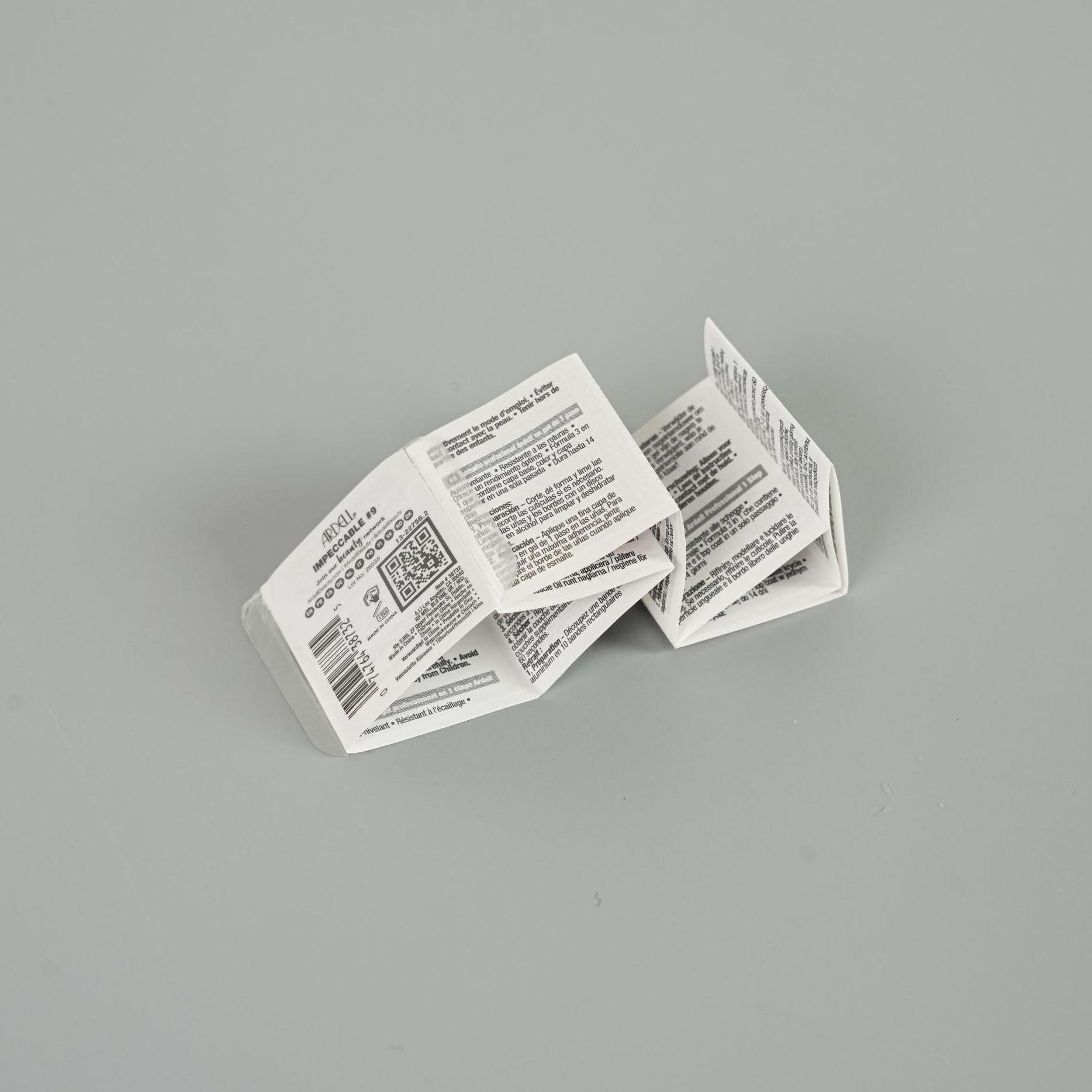
A custom roll label is supplied as a continuous web: die-cut labels sitting on a release liner, wound onto a core. The labels are already separated from each other by a small gap, so the applicator or dispenser only has to peel the liner away and press the label down.
That continuous format is what makes automation possible. A roll can carry hundreds to several thousand labels depending on size, which means the machine runs for a long stretch before anyone has to reload it. For anyone labeling more than a few hundred units a day, this is usually the format that pays for itself.
Roll labels also tend to use material more efficiently on press. The press runs a continuous web, so there is less handling waste than with flat sheets, and the die-cutting is done in-line rather than as a separate operation. We print roll labels across paper, PP, PET and clear film — the same facestock range described on our sticker labels page.
What Are Sheet Labels?
Sheet labels are pre-cut labels on flat sheets, typically A4 or a custom sheet size, with the labels arranged in a grid. They are applied by hand, or fed through a desktop laser or inkjet printer so that variable data — batch numbers, expiry dates, addresses — can be printed in-house on demand.
Sheets make sense in three situations. Very low volumes, where the setup cost of a roll is hard to justify. Sample and prototype runs, where the artwork is still moving. And in-house variable data printing, where the label content is different on every unit and the volume is modest.
The trade-off is labour. Every sheet label is applied by hand, so the cost per applied label rises steeply with volume, and hand application introduces alignment variance that a machine does not.
Which Format Fits Your Application Method?
This is the question that settles the decision. Work backwards from the machine, not forwards from the design.
| Application method | Format | Why |
|---|---|---|
| Automatic labeling machine | Roll | The applicator needs a continuous web, a defined core size and a specific unwind direction. |
| Semi-automatic dispenser | Roll | Dispensers peel from a roll and are usually built around a small core such as 40 mm or 76 mm. |
| Hand application, high volume | Roll, peeled by hand | Still cheaper per label at volume, and easier to store and dispense than loose sheets. |
| Hand application, low volume | Sheet | No tooling cost and no minimum order pressure. |
| In-house variable data printing | Sheet | Desktop printers accept sheets far more readily than rolls, unless a dedicated thermal roll printer is in place. |
If you already own an applicator, the format is decided for you — and the next step is getting the specification right rather than choosing a format.
What Do You Need to Specify on a Roll Label Order?
Roll labels are specified as a set of mechanical parameters, not just artwork. Getting these wrong is the most common reason a roll will not run on the customer's line.
Label roll core size
The core is the cardboard tube in the middle of the roll. Its inner diameter has to match the machine's spindle. 3 inch core label rolls — 76 mm — are the default for automatic applicators, while 40 mm or 25 mm cores suit dispensers and desktop roll printers. A roll on the wrong core simply will not mount.
Label unwind direction
The label unwind direction describes which edge of the label leads as the roll feeds and whether the printed face points inwards or outwards. It is normally expressed as a numbered position. An applicator that expects one label roll direction will misfeed or apply the label upside down if it receives another, so this has to be confirmed against the machine manual rather than assumed.
Roll outer diameter and labels per roll
The maximum outer diameter is limited by the machine's roll holder. Within that limit, the roll diameter and the label size together determine how many labels fit on one roll — which in turn sets how often the line stops for a reload.
Web width, gap and liner
Web width is the width of the liner the labels sit on. The gap is the space between adjacent labels, typically a few millimeters, and it has to be consistent because the sensor uses it to register each label. The liner itself matters too: a glassine liner is standard, while a PET liner is often used where the label is clear and the liner has to stay flat and stable through the press.
Registration marks
Where the applicator uses an eye-mark sensor rather than gap sensing, the print has to include a registration mark in a position the sensor can read. This is a print specification, not a machine setting, and it needs to be in the artwork.
How Does Label Size and Shape Affect the Choice?
Small, regular shapes — round, oval, rectangular — are straightforward in both formats, and they are the shapes automatic applicators handle most reliably. Very large labels, unusually long labels and irregular die-cut shapes are easier to produce in roll form because the die-cutting is part of the press run rather than a separate sheet operation.
If your product needs more printable area than a single panel allows, the format question and the structure question overlap. A multi layer label or a folding tag adds panels without increasing the footprint on the container, and both can be supplied on roll for machine application. We covered the material side of that decision in our guide to choosing the right label material.
How Do Roll and Sheet Labels Compare on Cost?
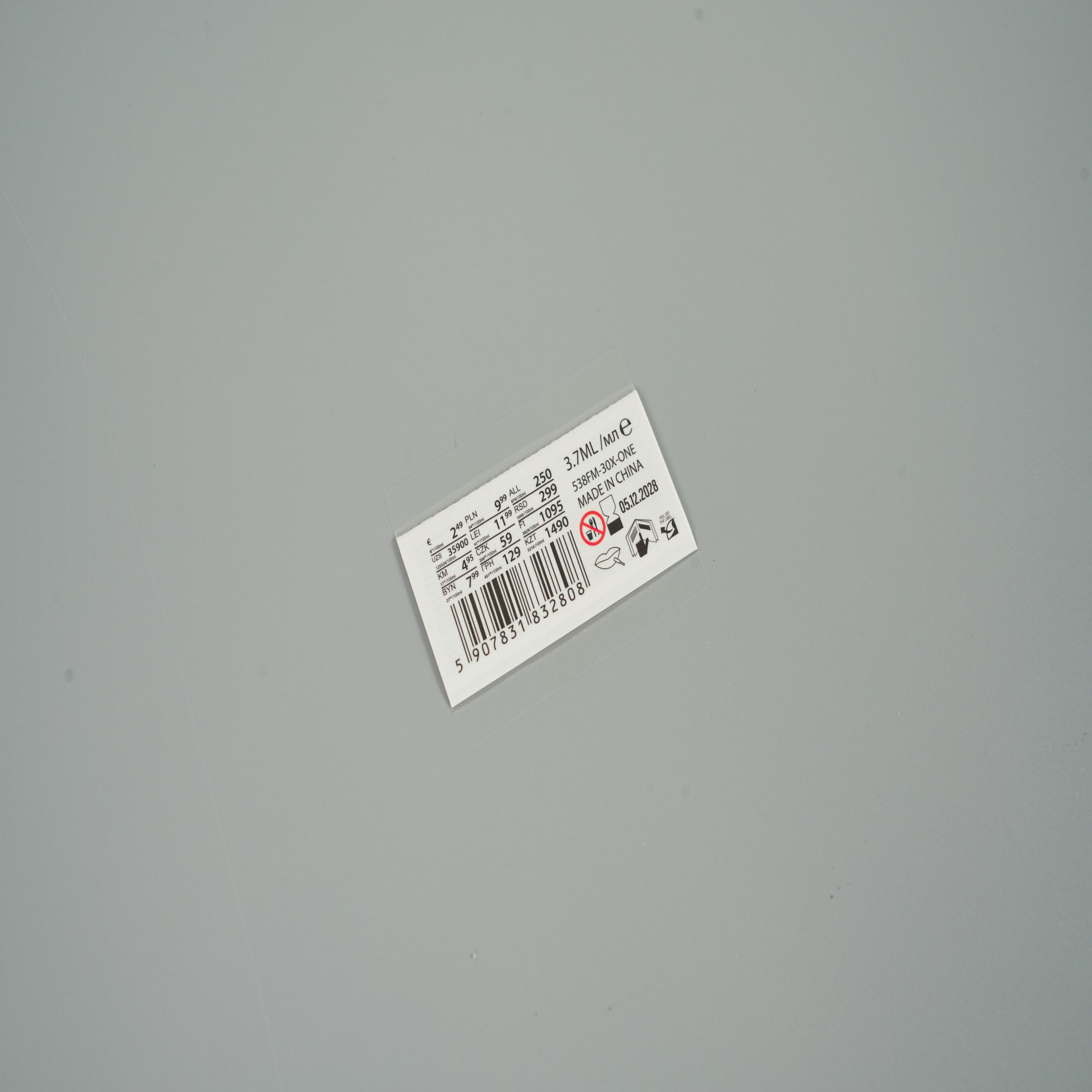
The cost structures are genuinely different, and comparing only the quoted price per label will mislead you.
| Cost factor | Roll labels | Sheet labels |
|---|---|---|
| Tooling | A die is required; it is a one-off cost that is reused on repeat orders. | Minimal — shapes are cut without a custom die. |
| Unit price at low volume | Higher, because the tooling is spread over few labels. | Lower — which is why short runs usually start on sheet. |
| Unit price at high volume | Falls sharply; the press runs continuously with less handling waste. | Stays comparatively high per label. |
| Application labour | Low once the line is set up — reloads are infrequent. | Every label is placed by hand. |
| Rework and waste | Machine placement is consistent. | Hand placement varies; crooked labels become rejects. |
The practical break-even sits somewhere in the low hundreds to low thousands of labels, and it moves with label size, shape and material. Above it, roll wins on total cost even before labour is counted. Below it, sheet wins because you are not paying for a die.
One more cost lever sits outside the format itself: the print process. Where a job sits between digital and flexographic printing often changes the run length at which a format switch becomes worthwhile.
What Changes When You Switch From Sheet to Roll?
The switch is not only a purchasing change. Four things have to be in place first:
An applicator or dispenser. Rolls cannot be applied by hand at any real speed. If there is no machine, there is no benefit.
A confirmed machine specification. Core size, maximum roll diameter, label size range and unwind direction all have to be checked against the machine before the first roll is printed.
Consistent die-cutting and registration. A machine senses the gap or the eye-mark on every label. If the gap varies, the applicator misplaces labels — a defect that does not exist in sheet supply.
A liner stiff enough to peel cleanly. At speed, a flimsy liner can curl or tear at the peel plate. Liner selection is part of the roll specification, not an afterthought.
Where those four are in place, the operational gain is significant: fewer reloads, no hand placement, and a consistent label position on every unit. For products where the label is the only place a compliance statement appears, that consistency has a value beyond the cost saving.
How Do You Brief a Roll label manufacturer?
A brief that gets the first label rolls right contains seven lines. Anything less and you are relying on your supplier to guess.
1. Label size and shape — width by height or diameter, in millimetres.
2. Material and finish — paper, PP, PET or clear film, plus matte, gloss or laminate.
3. Core size — 76 mm, 40 mm or 25 mm inner diameter.
4. Label unwind direction — the numbered position your machine requires.
5. Maximum roll outer diameter — set by the machine's roll holder.
6. Web width and gap — the liner width and the space between labels.
7. Quantity and packaging — labels per roll and rolls per carton.
Send those seven lines together with your artwork and you have a complete specification. The reason it matters: printed roll labels cannot be adjusted after the fact the way a sheet can. A roll that unwinds the wrong way, or that sits on a core your spindle cannot hold, is scrap.
It also helps to say what machine the roll is going onto. Suppliers who print for labels for automatic labeling machine setups will recognise the machine model and can often confirm the unwind position and roll diameter from it, rather than asking you to measure. If you are still comparing formats at this stage, the practical framing is simple: roll labels vs sheet labels is really a question about whether a machine is doing the application.
Which Should You Choose?
A short decision path that covers most projects:
Choose roll labels if you have an automatic applicator or dispenser, if you label more than roughly a thousand units per order, if you need consistent placement for compliance or retail reasons, or if you want the lowest total cost at production volume.
Choose sheet labels if you are labeling by hand, if you need a short or trial run, if the artwork is still changing, or if you print variable data on a desktop printer.
Choose roll even for hand application if the volume is high enough that handling flat sheets becomes the bottleneck. A roll peeled by hand is still faster to work through than a stack of sheets, and it stores in far less space.
Conclusion
The roll-versus-sheet decision is driven by your application method and your volume, not by which one looks better in a catalogue. Sheet labels are the right answer for short runs, trials and in-house variable data printing, because they carry almost no tooling cost. Roll labels become the better answer the moment an applicator enters the picture or the volume passes the low thousands, because the press run is more efficient and the labour disappears.
If you go the roll route, treat the mechanical specification as seriously as the artwork. Core inner diameter, unwind direction, roll outer diameter, web width, gap consistency, liner type and registration marks are what make a roll run on your line rather than sit in the store room. Confirm all seven against the machine before the first print run.
We supply custom roll labels and sheet labels on paper, PP, PET and clear film from an FSC certified facility, with multi-layer and booklet structures available in roll form for machine application. Tell us your applicator model and label size and we will confirm the roll specification, unwind direction and a sample before production.
